Star Entertainment Group’s Liquidity Crisis & Trading Halt: An In‑Depth Analysis for 2025
The Star Entertainment Group (ASX: SGR) became one of the ASX's most closely watched turnaround situations in 2025 as a severe liquidity crisis, regulatory challenges, weak trading conditions and rising financing pressure converged.
The crisis reached a critical point in February and March 2025. The company was unable to lodge its half-year financial report by the required deadline, resulting in the automatic suspension of its shares from trading on 3 March 2025. The Star subsequently stated that it needed a refinancing commitment capable of refinancing its existing corporate debt and providing additional liquidity before it could finalise the report.
The episode provides an important case study in how regulatory intervention, operating performance, debt obligations and liquidity can interact to create significant pressure on a listed company.
For investors researching broader ASX market risks, StockBinge's analysis of Disappointing Earnings from Major Banks and Miners: A Comprehensive 2025 Analysis provides additional context on how weaker corporate earnings can affect market sentiment.
What Happened to Star Entertainment Group in 2025?
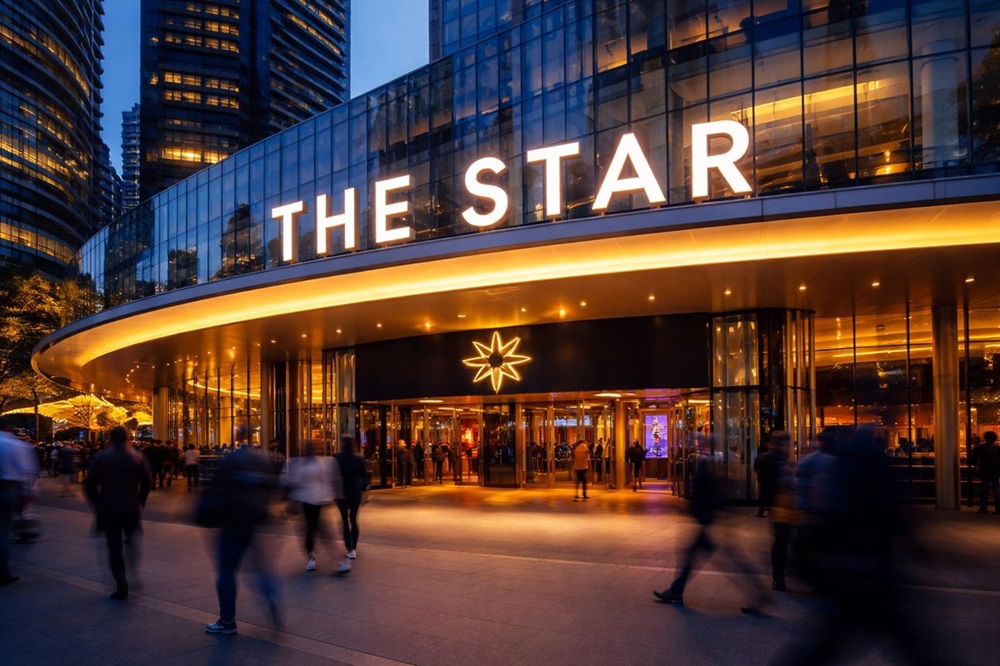
The Star Entertainment Group operates casino and entertainment properties including The Star Sydney, The Star Gold Coast and The Star Brisbane.
By early 2025, the company was dealing with several simultaneous pressures.
These included:
- Weak operating performance
- Regulatory restrictions
- Significant remediation costs
- Legal and consulting expenses
- Casino operating reforms
- Liquidity constraints
- Debt obligations
- Pressure to reduce costs
- Uncertainty over future funding
The company's 8 January 2025 ASX announcement revealed that available cash had fallen to $79 million as at 31 December 2024, down from $149 million three months earlier. The company said approximately $107 million of available cash had been consumed during the quarter after adjusting for the effect of its new debt facility.
The announcement also said conditions for accessing another $100 million tranche of its debt facility remained challenging and that the company was exploring additional liquidity solutions.
Why Was Star Entertainment Facing a Liquidity Crisis?
Liquidity refers to a company's ability to meet its short-term financial obligations.
A company can own valuable assets and still face a liquidity crisis if cash inflows are insufficient to cover near-term payments.

For Star Entertainment, the pressure came from several directions.
Declining Operating Performance
The company's casino operations were facing difficult trading conditions.
In its H1 FY25 results, Star reported normalised revenue of $650 million and a normalised EBITDA loss of $26 million. The company attributed the deterioration partly to mandatory carded play and cash limits at The Star Sydney, as well as challenging trading conditions at The Star Gold Coast.
This matters because casino operators have substantial fixed costs. When revenue declines, a significant portion of those costs can remain.
That can cause operating margins to deteriorate quickly.
Regulatory Restrictions
Star's financial difficulties cannot be separated from the regulatory environment surrounding its casinos.
The company had been undertaking substantial remediation and transformation work following regulatory investigations into its operations.
These programmes generated additional costs while restrictions affected certain revenue-generating activities.
Debt and Financing Pressure
Star had already been relying on additional financing to strengthen liquidity.
In December 2024, the company drew down the first $100 million tranche of a new facility.
However, the January 2025 update said that accessing the additional $100 million tranche remained subject to conditions that were proving challenging to satisfy.
This illustrates the difference between committed financing capacity and immediately available cash.
A facility may exist on paper, but conditions attached to accessing the money can become important when a company is under financial pressure.
The February 2025 Reporting Deadline
The situation became significantly more serious in February.
Star was scheduled to release its half-year results for the six months ended 31 December 2024 on 28 February 2025.
On 28 February, the company announced that it was continuing to explore liquidity solutions and expected to receive one or more proposals that could materially improve its liquidity position.
The company also warned that the half-year financial report might only be capable of being finalised if it received liquidity proposals sufficiently capable of supporting its assessment as a going concern.
This was a major warning sign for shareholders.
Why Did Star Entertainment Shares Stop Trading?
The Star failed to lodge its half-year financial report by the required deadline.
On 3 March 2025, the ASX automatically suspended Star Entertainment's securities under Listing Rule 17.5 because the required periodic report had not been lodged.
Star separately confirmed that its shares had been automatically suspended and said the suspension would remain in place until the half-year report was lodged and the ASX determined that the securities should be reinstated.
This was therefore not simply a conventional voluntary trading halt announced by the company.
It was an ASX trading suspension arising from the failure to lodge the required financial report on time.
That distinction is important for investors.
What Is the Difference Between a Trading Halt and Suspension?
A trading halt and a trading suspension can have different causes and implications.
Trading Halt
A trading halt is generally a temporary pause in trading, often requested by a company while it prepares an announcement or deals with market-sensitive information.
Trading Suspension
A suspension prevents securities from trading and can be imposed by the ASX for reasons including failure to comply with listing requirements.
In Star's case, the March 2025 suspension was linked specifically to the company's failure to lodge its half-year financial report by the deadline.
What Did Star Need to Resolve the Crisis?
Star's immediate priorities involved securing sufficient liquidity and addressing the conditions required to complete its financial reporting.
The company stated that it was unlikely to be able to lodge its H1 FY25 report unless and until it secured a refinancing commitment capable of refinancing existing corporate debt while also providing additional liquidity.
This created a circular financial challenge:
Weak operating performance → lower cash generation → greater liquidity pressure → refinancing requirement → greater uncertainty for investors.
Breaking that cycle required additional funding, cost reductions and operational improvements.
Star Entertainment’s H1 FY25 Results
The company's delayed half-year results were eventually released on 15 April 2025.
The results showed the scale of the financial deterioration.
Star reported:
- Normalised revenue: $650 million
- Normalised EBITDA: -$26 million
- Statutory net loss: $302 million
- Normalised loss after tax before significant items: $136 million
- Significant items: $166 million
The company also said that trading performance had deteriorated during H1 FY25.
Mandatory carded play and cash limits at The Star Sydney were identified as significant factors, while The Star Gold Coast faced challenging trading conditions and market-share pressure.
The Liquidity Problem Was More Than a Cash Balance
When analysing a liquidity crisis, investors should not look only at the cash figure.
Several other factors matter.
Restricted Cash
Not all cash shown on a balance sheet may be immediately available to fund ordinary corporate obligations.
Star's January update distinguished between total cash, restricted cash and cage cash. Its available cash figure at 31 December 2024 was $79 million after these adjustments.
Cash Burn
The rate at which a company consumes cash can be more important than its cash balance alone.
Star reported a significant decline in available cash during the December 2024 quarter.
Debt Maturities
Debt repayments and financing conditions can create additional pressure when operating cash flow is weak.
Access to Funding
A company may have financing facilities but still face conditions that prevent immediate access to the full amount.
Cost-Cutting Measures
Cost reduction became an important component of Star's response.
In its H1 FY25 results, Star said it had achieved its previously announced target of $100 million in annualised cost savings and was working to embed those savings while identifying further opportunities for cost reduction.
Cost savings can improve liquidity, but investors need to consider whether savings are sustainable and whether they negatively affect the company's ability to generate future revenue.
Asset Sales and Other Sources of Liquidity
Star also explored asset sales and strategic transactions as part of its liquidity response.
By the end of FY25, the company reported that it had accessed additional liquidity from several sources, including:
- A further $100 million tranche under its senior facility
- $45 million of upfront cash associated with its DBC transaction
- A $300 million strategic investment from Bally's Corporation and Investment Holdings
- Approximately $60 million from the sale of The Star Sydney Event Centre
- Approximately $60 million relating to the Treasury Brisbane Casino building sale
These measures illustrate that the company's 2025 liquidity response involved more than conventional bank financing.
Strategic Investment and Recapitalisation
One of the most significant developments during 2025 was the proposed strategic investment involving Bally's Corporation and Investment Holdings.
Star's FY25 reporting stated that the company had secured a $300 million strategic investment, of which $233 million had been received by 25 August 2025.
For shareholders, strategic investment can have both financial and ownership implications.
Additional capital can strengthen liquidity and provide resources for restructuring, but new equity can also change the ownership structure and dilute existing shareholders.
That makes the terms of any recapitalisation just as important as the headline amount of capital raised.
What Happened When Trading Resumed?
After being suspended since late February, Star's shares resumed trading in April 2025 following the release of its financial results and progress on its funding arrangements.
Reuters reported that the shares were highly volatile when trading resumed on 16 April, initially falling before moving higher and ultimately closing lower that day.
The market reaction demonstrated the uncertainty surrounding the company.
Investors were simultaneously assessing:
- The size of the losses
- Liquidity
- Debt
- Strategic investment
- Regulatory requirements
- Future earnings
- Potential dilution
- The company's ability to execute its turnaround plan
Key Risks Facing Star Entertainment
Regulatory Risk
The company's casinos operate in a heavily regulated environment.
Further regulatory action could affect operations, costs and revenue.
Liquidity Risk
Even after raising additional capital, ongoing cash requirements remain an important consideration for a business undergoing restructuring.
Debt Risk
High debt levels can restrict financial flexibility.
Operational Risk
Casino revenue can be affected by consumer spending, tourism, competition and regulatory restrictions.
Execution Risk
Cost reductions, remediation programmes and strategic transactions need to be successfully implemented.
Shareholder Dilution
Capital raisings can reduce the proportional ownership of existing shareholders depending on their structure.
What Investors Should Monitor
Anyone following Star Entertainment Group (ASX: SGR) can monitor several indicators.
Cash Position
Look at unrestricted available cash rather than simply total cash and deposits.
Cash Flow
Examine whether operating activities are generating or consuming cash.
Debt
Track total borrowings, refinancing arrangements and covenant requirements.
Revenue
Casino revenue trends can indicate whether operational changes are translating into improved performance.
EBITDA
Operating earnings provide an indication of whether the core business is moving toward sustainable profitability.
Regulatory Milestones
Regulatory approvals and remediation requirements remain important.
Capital Raising
Investors should examine the structure and terms of any new capital.
Asset Sales
Asset disposals can improve liquidity but may also reduce future earnings or strategic flexibility.
How Star's Crisis Fits Into the Broader ASX Market
Star's situation also highlights a broader issue for ASX investors: balance-sheet strength matters when operating conditions deteriorate.
A company can have valuable assets, an established brand and significant revenue but still encounter severe financial pressure when cash generation falls while debt, regulatory costs and capital requirements remain high.
This is why investors often examine liquidity alongside earnings.
StockBinge's ASX Banking Stocks in 2026 – Opportunities, Risks and What Investors Should Watch provides a useful comparison of how investors assess balance sheets, earnings quality, capital strength and dividend sustainability in another major ASX sector.
For investors interested in market infrastructure and regulatory issues, StockBinge's ASX Regulatory Challenges and CHESS Platform Transformation: A 2025 In-Depth Analysis also examines how regulatory and operational issues can affect listed-market participants.
Star Entertainment Group: Key 2025 Timeline
| Date | Development |
|---|---|
| 8 Jan 2025 | Star reported $79m available cash at 31 Dec 2024 and warned of liquidity challenges. |
| 28 Feb 2025 | Company said it was pursuing liquidity solutions and warned of going-concern uncertainty. |
| 3 Mar 2025 | ASX suspended SGR shares after the half-year report was not lodged by the deadline. |
| 15 Apr 2025 | Star released its H1 FY25 results. |
| 16 Apr 2025 | Trading resumed and shares experienced significant volatility. |
| FY25 | Star pursued cost savings, asset sales and additional strategic funding. |
| 29 Aug 2025 | Star reported FY25 liquidity measures, including strategic investment and asset-sale proceeds. |
The dates and financial developments above are based primarily on Star's ASX announcements, company reporting and ASX market notices.
Frequently Asked Questions
Why was Star Entertainment suspended from trading in 2025?
Star Entertainment's shares were automatically suspended by the ASX on 3 March 2025 because the company had not lodged its required half-year financial report by the deadline.
How much available cash did Star Entertainment have in January 2025?
Star reported $79 million of available cash at 31 December 2024, compared with $149 million at 30 September 2024.
Why was Star Entertainment facing a liquidity crisis?
The company was dealing with weak trading conditions, regulatory restrictions, remediation costs, legal and consulting expenses, capital requirements and debt obligations. These factors placed pressure on cash generation and financing capacity.
What was Star Entertainment's H1 FY25 loss?
Star reported a statutory net loss of $302 million for H1 FY25 and a normalised loss after tax of $136 million before significant items.
Did Star Entertainment raise additional funding in 2025?
Yes. During FY25, Star reported access to additional liquidity from debt financing, asset transactions and a $300 million strategic investment involving Bally's Corporation and Investment Holdings.
What are the major risks for Star Entertainment?
Key risks include regulatory requirements, liquidity, debt, operating performance, capital requirements, execution of its remediation programme and potential shareholder dilution from capital transactions.
Is Star Entertainment still an ASX-listed company?
Yes. The company trades on the ASX under the ticker SGR. The temporary suspension in March-April 2025 was related to its delayed financial reporting and was subsequently lifted after the relevant reporting and reinstatement process.
Final Takeaway
The Star Entertainment Group liquidity crisis and trading halt in 2025 demonstrated how quickly financial pressure can build when weak operating performance, regulatory requirements, high costs and debt obligations occur at the same time.
The January 2025 disclosure of only $79 million in available cash was an early indication of the seriousness of the situation. The subsequent failure to lodge the half-year report resulted in an automatic ASX suspension on 3 March.
The eventual H1 FY25 results showed the extent of the financial deterioration, with a $302 million statutory net loss and a $26 million normalised EBITDA loss.
Star's response during 2025 included cost reductions, refinancing efforts, asset sales and strategic investment. By August, the company reported $234 million of available cash at 30 June 2025 and $189 million at 25 August after subsequent payments and transactions.
For investors, the broader lesson is that cash flow, liquidity, debt and funding access can be just as important as headline revenue and asset values when assessing a financially stressed company.
Star's situation also shows why investors should distinguish between a temporary trading suspension and the underlying financial condition of a business. A suspension can be resolved, but restoring sustainable cash generation and addressing structural operating and regulatory challenges can take considerably longer.
At StockBinge, we believe investors should conduct their own research and consider a company's financial position, risks, regulatory environment and capital structure before making investment decisions.
Disclaimer
This article is general information only and does not constitute personal financial advice. Securities trading involves risk and may not be suitable for every investor. Investors should consider their own objectives, financial circumstances and needs and seek professional financial advice where appropriate. Past performance is not indicative of future results.