 info@stockbinge.com.au
 03 8609 4895

Blog Details
- Home
- Blog Details
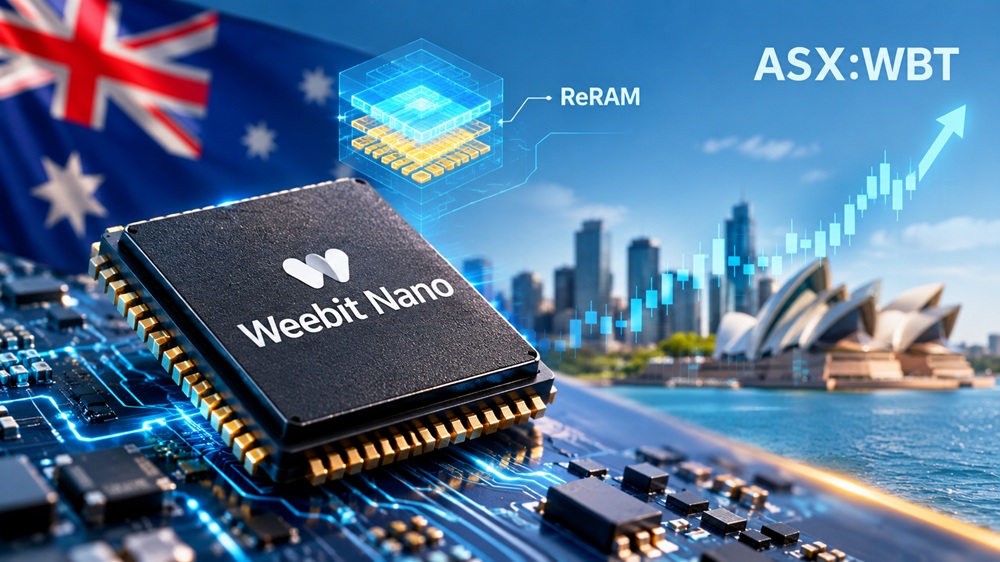
Weebit Nano (ASX:WBT): Stock Deep Dive and Outlook
Weebit Nano (ASX:WBT) has emerged as one of the more closely watched Australian semiconductor technology companies as demand grows for faster, lower-power and more efficient embedded memory.
The company develops and licenses Resistive RAM (ReRAM) technology, a type of non-volatile memory designed to address some of the limitations of conventional embedded flash. Its technology is being evaluated and adopted across semiconductor foundries, integrated device manufacturers and product companies.
Weebit Nano's commercial progress accelerated significantly during FY2026. The company secured licensing agreements with major semiconductor companies including Texas Instruments and onsemi, achieved qualification at DB HiTek, and expanded its customer pipeline.
For investors researching Weebit Nano (ASX:WBT), the central question is no longer simply whether the technology works. The bigger questions are how quickly commercial adoption can scale, how licensing revenue develops and whether customer designs eventually translate into mass-produced chips and recurring royalties.
Weebit Nano (ASX:WBT): Company Overview
Weebit Nano was founded in 2015 and listed on the ASX in December 2016. The company is headquartered in Australia with international operations supporting its semiconductor technology and customer relationships.
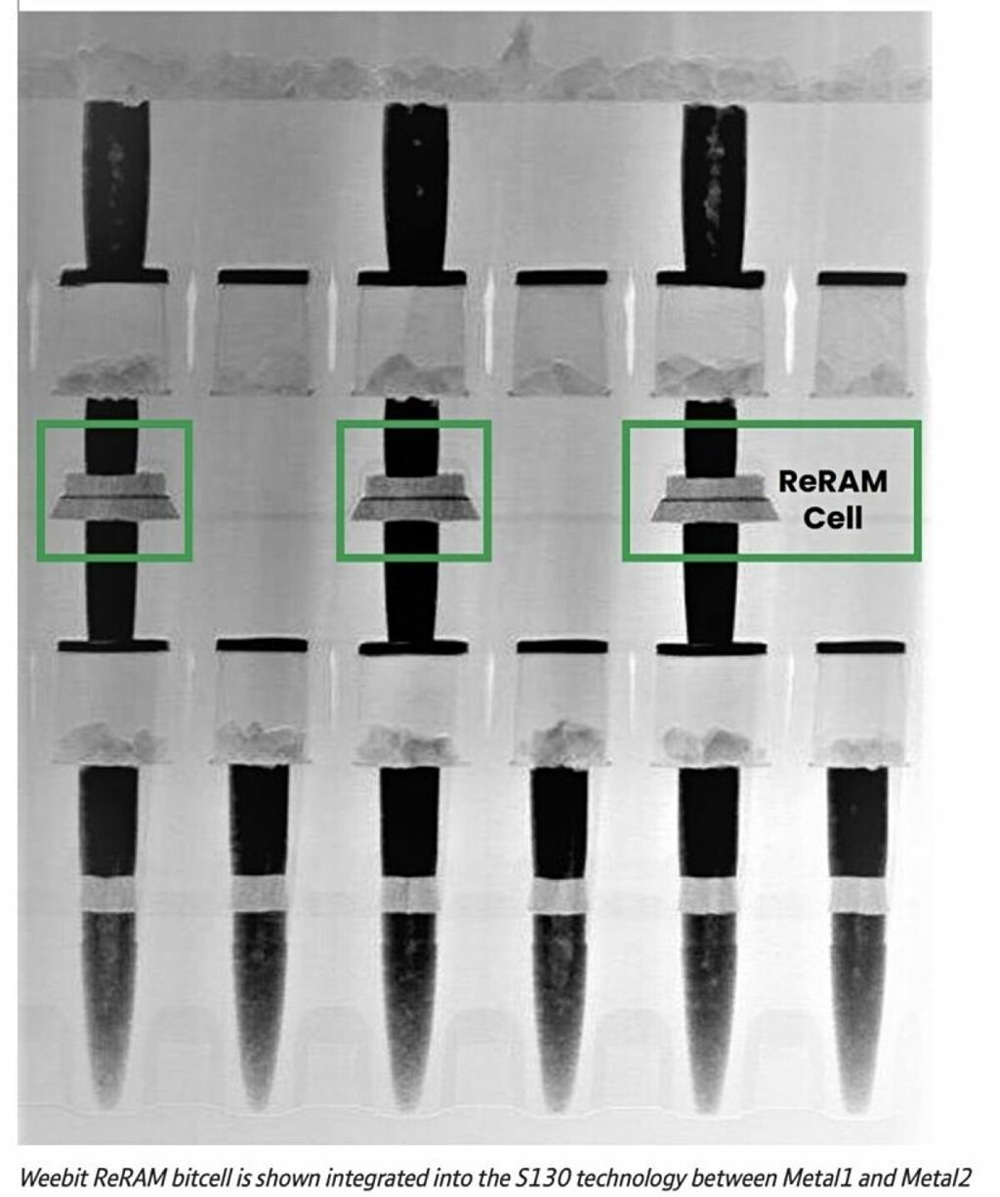
Its core product is Weebit ReRAM, an embedded non-volatile memory technology intended for integration into semiconductor chips.
Unlike conventional volatile memory, non-volatile memory retains information when power is removed. This makes it useful in applications ranging from microcontrollers and industrial electronics to automotive systems, power-management chips and edge-AI devices.
According to Weebit Nano, its technology has been demonstrated across multiple semiconductor process nodes and is designed to use standard semiconductor manufacturing processes rather than requiring specialised memory manufacturing infrastructure.
The company's technology journey has progressed from research and demonstrations toward commercial licensing. Weebit says it generated its first A$1 million of revenue in 2024 and subsequently expanded its commercial relationships.
What Does Weebit Nano Actually Do?
Understanding ReRAM
ReRAM, or Resistive Random Access Memory, stores information by changing the resistance of a material.
For semiconductor manufacturers, embedded memory is important because many modern chips require memory to store firmware, configuration data, AI parameters or other information directly on the chip.
Traditional embedded flash has been widely used for this purpose. However, as semiconductor geometries become smaller, integrating flash can become increasingly difficult.
Weebit is positioning ReRAM as an alternative that can provide advantages in areas such as power consumption, speed, scalability and manufacturing integration.
The company states that its ReRAM can scale to advanced process technologies and has demonstrated technology from 130nm down to 22nm nodes.
Why Embedded Memory Matters
The opportunity is potentially broader than one semiconductor application.
Embedded memory can be incorporated into:
- Microcontrollers
- Automotive electronics
- Industrial systems
- Power-management ICs
- IoT devices
- Consumer electronics
- Edge-AI processors
- Robotics
- Security applications
Weebit has also been developing applications for AI and edge computing, where low-power local memory can become increasingly important.
Weebit Nano's Major Commercial Milestones
FY2026 represented a significant step forward for the company.
In December 2025, Weebit announced a licensing agreement with Texas Instruments, covering integration of Weebit's ReRAM into TI's advanced process nodes for embedded processing semiconductors.
The agreement includes IP licensing, technology transfer, design and qualification work.
Weebit had previously licensed its ReRAM technology to onsemi, another major semiconductor manufacturer.
The company also achieved technology qualification at South Korea's DB HiTek based on JEDEC standards. In addition, test chips manufactured at onsemi's production facility were received and reported to be performing as expected.
These milestones are important because semiconductor customers typically require extensive technical validation before integrating a new memory technology into commercial products.
Weebit's partners and ecosystem also include companies such as SkyWater Technology, Synopsys, Cadence, Siemens and Silvaco.
For investors, the growing ecosystem matters because semiconductor IP adoption can depend heavily on compatibility with foundries, electronic-design-automation tools and existing chip-design workflows.
Weebit Nano FY2026 Financial Performance
One of the biggest changes in the Weebit Nano story has been the move toward meaningful commercial revenue.
For FY2026, the company reported revenue of approximately A$15.3 million, according to its FY2026 reporting.
This followed FY2025 revenue of approximately A$4.4 million, representing a substantial year-on-year increase.
The company also entered FY2026 with a much stronger financial position than in previous years.
Weebit reported approximately A$167 million in cash at bank as of 30 June 2026 after completing major capital raisings during the year.
The company raised approximately A$80 million through an institutional placement in March 2026 and a further approximately A$15 million through a Share Purchase Plan in May.
That funding gives Weebit considerable resources to continue technology development, customer engagement and commercialisation.
However, investors should also recognise that Weebit remains a growth-stage technology company rather than a mature, consistently profitable semiconductor business.
The company's future valuation therefore depends heavily on its ability to convert technology adoption into sustainable revenue and eventually stronger earnings and cash generation.
Weebit Nano Stock Performance and Valuation Context
As of 18 September 2026, WBT was trading around A$3.34, with a market capitalisation of approximately A$804 million based on available market data.
The stock has also experienced significant volatility.
Available market data shows a 52-week high of approximately A$8.61 and a 52-week low around A$3.02. This wide range highlights how strongly investor expectations can influence an emerging semiconductor technology stock.
The share price should therefore be considered alongside operational milestones rather than viewed in isolation.
For a company such as Weebit Nano, investors may focus on:
- Licensing agreements
- Customer design wins
- Chip tape-outs
- Technology qualification
- Production volumes
- Royalty opportunities
- Revenue growth
- Cash burn
- Further capital raisings
A successful technical milestone does not automatically translate into immediate revenue, while a customer tape-out does not necessarily mean large-scale commercial production has already begun.
Three Customer Designs Have Taped Out
One of the most important FY2026 developments was the progression of customer products toward manufacturing.
In May 2026, Weebit announced that two product customers had successfully taped out chip designs incorporating its ReRAM technology. One customer already had a functional prototype.
By July 2026, Weebit reported that three customer chip designs had taped out.
Tape-out means a chip design has been released for manufacturing. It is therefore an important bridge between development and eventual commercial production.

The next milestones are potentially even more important:
- Silicon manufacturing
- Functional testing
- Product qualification
- Customer production decisions
- Volume manufacturing
- Potential royalty generation
This progression is something investors researching Weebit Nano stock should monitor closely.
Weebit Nano Outlook: Key Growth Drivers
1. Semiconductor Memory Demand
Modern electronics increasingly require memory integrated directly into chips.
The growth of connected devices, industrial automation, automotive electronics and edge computing could expand the addressable market for embedded non-volatile memory.
2. Edge AI
AI is increasingly moving beyond cloud data centres into cars, industrial machines, cameras, robots and other edge devices.
This creates demand for computing architectures that can operate efficiently with limited power and latency.
Weebit has specifically highlighted edge AI as an application for its ReRAM technology.
Investors following the broader AI infrastructure theme can also read our guide to ASX data centre stocks in 2026.
3. Expansion of Licensing Agreements
The company's business model is based on licensing semiconductor IP rather than manufacturing memory chips itself.
That creates the possibility of scaling revenue without building semiconductor fabrication facilities.
However, the timing and size of licensing payments can vary considerably depending on customer agreements and technology adoption.
4. Potential Royalty Revenue
One of the longer-term attractions of semiconductor IP businesses is the possibility of royalties when customer products enter volume production.
This is different from one-off engineering or licensing payments.
The transition from development agreements to high-volume commercial products could therefore be an important phase in Weebit Nano's future.
Key Risks for Weebit Nano Investors
Commercialisation Risk
Having proven technology and securing licensing agreements does not guarantee mass-market adoption.
Customers still need to complete qualification, manufacturing and product launches.
Competition
Weebit operates in a competitive semiconductor memory market.
Embedded flash remains widely established, while other emerging memory technologies are also being developed.
Customer Concentration
A small number of major semiconductor customers can have a significant influence on revenue during the early commercialisation phase.
Capital and Dilution Risk
Weebit strengthened its balance sheet through substantial capital raisings in 2026.
While this provides funding for growth, investors should monitor future capital requirements and potential dilution if additional funding becomes necessary.
Valuation Volatility
WBT's share price has shown substantial volatility. Expectations surrounding licensing agreements, customer adoption and future royalties can cause large movements before financial results fully reflect those expectations.
What Should Investors Watch Next?
For the next stage of the Weebit Nano story, several indicators deserve close attention.
Customer Production
The transition from tape-out to commercial production is arguably one of the most important milestones.
New Licensing Agreements
Additional foundry, IDM and product-company agreements could broaden Weebit's commercial footprint.
Revenue Growth
Investors should examine whether revenue continues increasing as customer projects progress.
Royalty Potential
The emergence of meaningful recurring royalty revenue could change the economics of the business over time.
Cash Usage
Despite its substantial cash balance, Weebit remains a growth-stage company. Cash expenditure and operating losses should therefore remain part of any ongoing analysis.
Weebit Nano (ASX:WBT) Outlook for 2026 and Beyond

The Weebit Nano story has shifted significantly from a semiconductor technology development story toward a commercialisation story.
The company now has licensing relationships with major semiconductor companies, qualified technology at DB HiTek, customer products progressing through tape-out and a substantially stronger balance sheet.
The longer-term opportunity depends on whether these developments translate into increasing volumes of commercial chips and recurring licensing or royalty income.
At the same time, investors need to account for the risks associated with an early-stage semiconductor IP company, including customer adoption, competition, execution, valuation volatility and future funding requirements.
Rather than focusing only on short-term share-price movements, investors researching Weebit Nano (ASX:WBT) should track the company's commercial milestones and financial conversion over time.
For broader technology exposure, our ASX 200 portfolio guide explains how technology companies can fit into a diversified Australian equity portfolio.
Frequently Asked Questions About Weebit Nano (ASX:WBT)
What does Weebit Nano do?
Weebit Nano develops and licenses ReRAM technology for embedded non-volatile memory applications in semiconductor chips.
What is Weebit Nano's ASX code?
Weebit Nano trades on the Australian Securities Exchange under the ticker ASX:WBT.
What is ReRAM?
ReRAM, or Resistive Random Access Memory, is a type of non-volatile memory that stores information through changes in electrical resistance. It is being developed as an alternative to conventional embedded memory technologies for various semiconductor applications.
Does Weebit Nano have major customers?
Yes. Weebit has announced licensing agreements with major semiconductor companies including Texas Instruments and onsemi. It has also reported relationships with foundries and product companies.
Has Weebit Nano generated revenue?
Yes. Weebit Nano reported approximately A$15.3 million in FY2026 revenue, compared with approximately A$4.4 million in FY2025.
Does Weebit Nano pay a dividend?
Weebit Nano is a growth-stage technology company and does not currently pay a regular dividend.
What are the main risks of Weebit Nano stock?
Key risks include technology adoption, customer concentration, competition from other memory technologies, delays between tape-out and commercial production, operating losses, future capital requirements and share-price volatility.
Conclusion
Weebit Nano (ASX:WBT) is developing a semiconductor IP business around ReRAM, with its investment case increasingly linked to commercial adoption rather than technology development alone.
The company's FY2026 progress — including major licensing agreements, customer tape-outs, technology qualification and stronger revenue — provides several important milestones to monitor.
The next stage is conversion: turning customer designs and licensing relationships into commercial production, recurring revenue and potentially royalties.
For investors, the most useful approach is to follow those operational milestones alongside revenue growth, cash usage and valuation rather than relying solely on short-term share-price movements.
As always, StockBinge content is general information only and is not personal financial advice. Investors should conduct their own research and consider their financial circumstances and risk tolerance before making investment decisions.
Talk to Our Experts
ABN 54 672 177 347 | ACN 672 177 347
Copyright © 2026 StockBinge. All Right Reserved. Design by StockBinge.