.jpg)
Post-Inauguration Volatility: ASX 200 Surges Amid Global and Domestic Influences
Post-Inauguration Volatility became a major theme for Australian investors in 2025 as the ASX 200 responded to changing expectations around US economic policy, tariffs, interest rates, commodity prices and domestic economic conditions.
Following Donald Trump's inauguration as US president on 20 January 2025, the Australian share market initially moved higher. On 21 January, the ASX 200 gained 0.66% to close at 8,402.4 points, with financial stocks among the stronger performers.
However, the market's reaction was not driven by the inauguration alone. Australian equities were simultaneously responding to global bond yields, commodity prices, Australian interest-rate expectations, the Australian dollar and company-specific developments.
The subsequent months demonstrated just how quickly sentiment could change. US tariff announcements in April triggered a significant global market sell-off, while changing expectations around monetary policy and trade negotiations later contributed to a recovery in Australian equities.
This article examines Post-Inauguration Volatility, the forces influencing the ASX 200 and what investors should understand about the relationship between global political developments and Australia's share market.
What Is Post-Inauguration Volatility?
Post-Inauguration Volatility refers to fluctuations in financial markets following the change in a country's political leadership and the introduction or anticipated implementation of new policies.
For Australian investors, the US presidential inauguration was particularly relevant because US policy can influence:
- Global trade
- Commodity demand
- Energy markets
- Inflation expectations
- Interest rates
- Bond yields
- Currency markets
- Investor risk appetite
The ASX 200 gained 0.5% on 20 January 2025 ahead of the inauguration, closing at 8,347 points. The following trading session saw another 0.66% increase.
This early strength showed that investors were initially interpreting the political transition alongside broader economic and market expectations rather than reacting to the inauguration in isolation.
ASX 200 Reaction After the US Inauguration
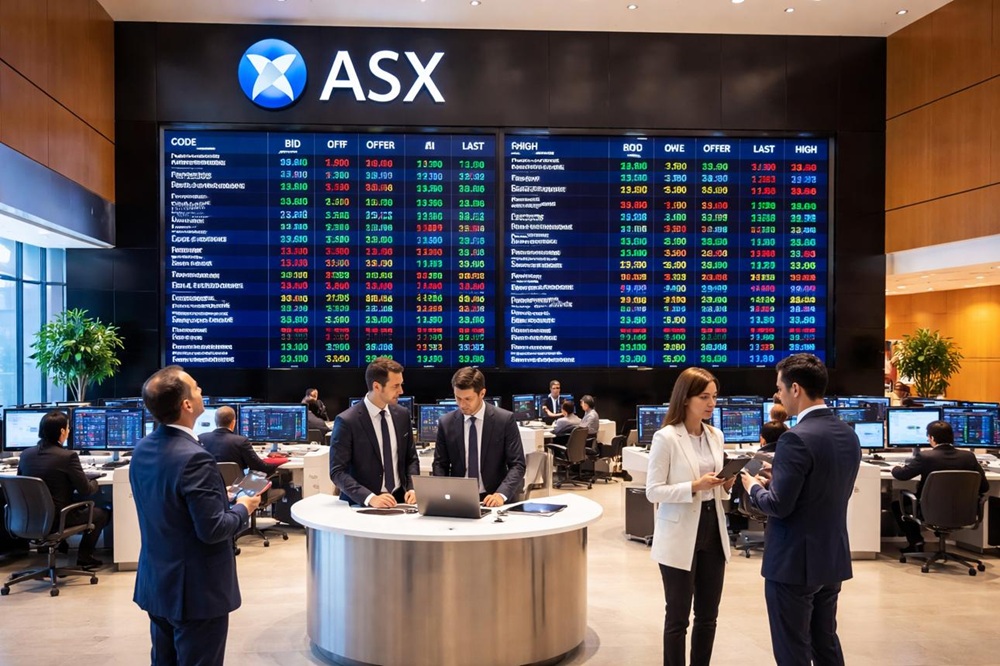
The first trading session after the inauguration provided an early indication of how Australian equities were responding to the new US administration.
The ASX 200 closed at 8,402.4 points on 21 January 2025, gaining 55 points or 0.66%. Financial stocks were among the strongest performers, with the S&P/ASX 200 Financials index rising 1.25%.
The reaction was not uniform across all sectors. Some areas of the market performed better than others as investors assessed the potential economic consequences of US policy changes.
This is important because the ASX 200 is made up of companies with very different exposures to interest rates, commodities, consumer spending and global trade.
Why Did US Policy Affect the ASX?
Australia is deeply integrated into the global economy.
The country is a major exporter of iron ore, coal, natural gas, gold and other resources. Australian companies also depend on international investment flows and global demand.
As a result, US economic policy can affect the ASX through several channels.
Trade Policy
Tariffs can alter the flow of goods between countries and potentially affect global economic growth.
For Australia, the consequences can occur indirectly. A slowdown in major economies could reduce demand for commodities, while changes in global supply chains could affect Australian exporters and importers.
The Reserve Bank of Australia has noted that changes in global trade policy can affect Australia through trade, financial and exchange-rate channels.
Interest Rates
US fiscal and trade policies can influence inflation expectations.
If markets expect higher US inflation, investors may anticipate higher interest rates for longer. This can push global bond yields higher and influence equity valuations.
Commodity Prices
Commodity markets are particularly important for Australia.
Iron ore, copper, gold, lithium, coal and energy prices can significantly affect the earnings expectations of ASX-listed resource companies.
Post-Inauguration Volatility and the Australian Dollar
The Australian dollar is another important transmission channel between global events and the ASX.
The Australian dollar can respond to changes in commodity prices, interest-rate differentials, global risk sentiment and economic expectations.
The Reserve Bank of Australia describes the exchange rate as an important mechanism through which international economic shocks affect the Australian economy.
For ASX investors, currency movements can affect different businesses in different ways.
Exporters
Australian companies with significant overseas revenue can benefit from a weaker Australian dollar when foreign earnings are translated back into Australian dollars.
Importers
Companies dependent on imported products, equipment or raw materials may face higher costs when the Australian dollar falls.
Mining Companies
Mining companies can be influenced by both commodity prices and currency movements because many commodities are priced internationally in US dollars.
For additional analysis of Australia's major mining companies, see StockBinge's Fortescue and Other Mining Giants Reshaping the ASX in 2025.
Financial Stocks and Post-Inauguration Volatility
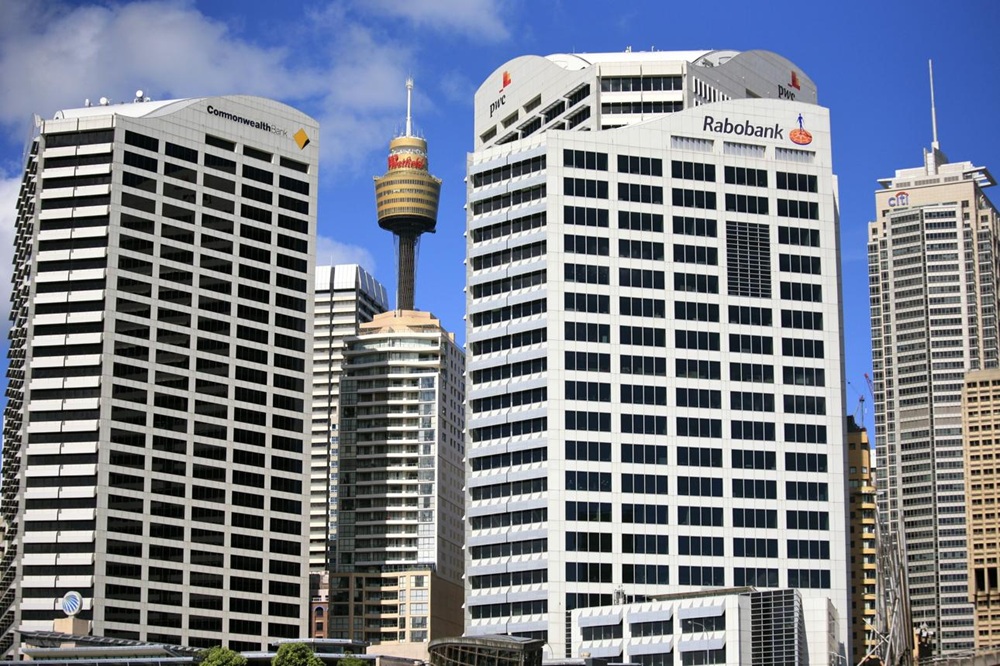
Australian banks represent a substantial portion of the ASX 200, making the financial sector particularly important when analysing market movements.
Following the US inauguration, financial stocks were among the stronger performers. The S&P/ASX 200 Financials index rose 1.25% on 21 January 2025.
Banks are influenced by a range of economic variables, including:
- Interest rates
- Net interest margins
- Housing credit
- Deposit competition
- Household debt
- Bad debts
- Employment
- Economic growth
Higher interest rates can increase interest income on some loans, but they can also increase funding costs and place pressure on borrowers.
For a detailed look at Australia's banking sector, see StockBinge's ASX Banking Stocks in 2026 – Opportunities, Risks and What Investors Should Watch.
Mining Stocks and Global Economic Expectations
Mining companies are another major component of the ASX.
Companies such as BHP, Rio Tinto and Fortescue generate substantial revenue from international commodity markets.
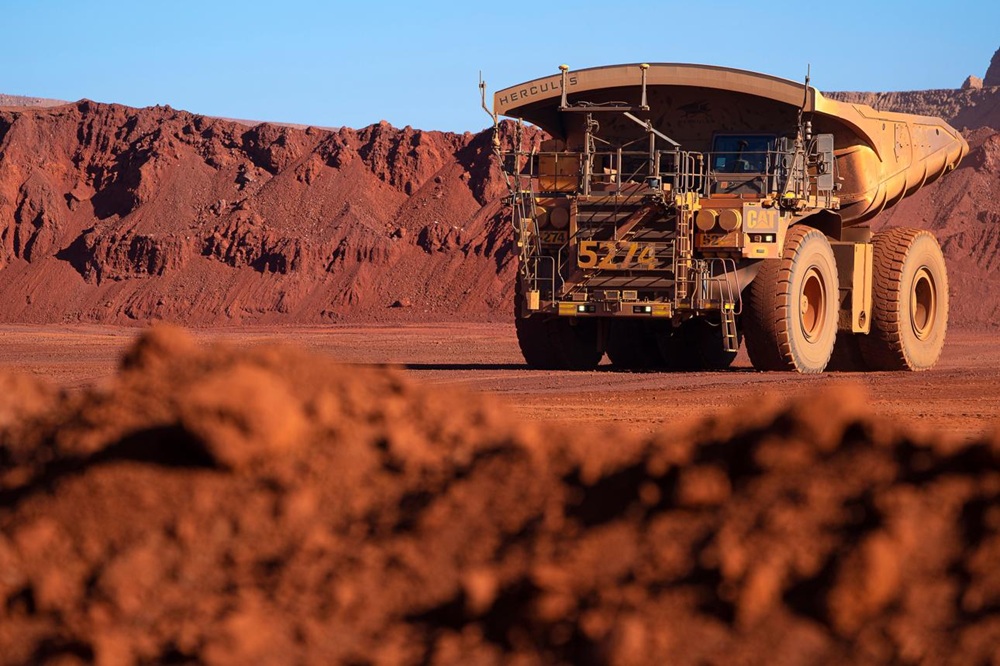
Changes in global economic expectations can therefore have a direct effect on investor expectations for mining-sector earnings.
Iron Ore
Iron ore remains one of Australia's most important export commodities.
Chinese steel production, infrastructure investment, property activity and global industrial demand can influence iron ore prices.
Copper
Copper has become increasingly important because it is used in electricity networks, renewable energy infrastructure, electric vehicles and industrial applications.
Gold
Gold can behave differently from industrial commodities because investment demand can increase during periods of economic or geopolitical uncertainty.
StockBinge's Gold Price Outlook 2026: What It Means for ASX Gold Stocks provides additional analysis of gold prices and Australian gold stocks.
Trade Tensions Became a Major Source of Volatility
The initial market reaction following the inauguration was only the beginning of a much broader period of uncertainty.
US tariff announcements in April 2025 triggered substantial movements across global financial markets.
The Reserve Bank of Australia reported that equity prices across advanced economies fell sharply following the US tariff announcements on 2 April and subsequent retaliation by China. Australian equity prices also declined sharply before recovering as some tariffs were paused or reduced.
This episode demonstrated how quickly international trade policy can affect Australian equities.
For investors following the resource sector, StockBinge's Global Trade Tensions and Their Impact on ASX Resource Stocks in 2026 provides further context.
ASX 200 Volatility During 2025
Looking at the full year provides a clearer picture of the market's volatility.
According to the ASX's 2025 year-in-review, the S&P/ASX 200 reached 20 new all-time closing highs during 2025.
The index reached 8,555.8 points on 14 February before falling sharply during the April tariff shock. It subsequently recovered and reached an all-time closing high of 9,094.7 points on 21 October 2025.
The sequence was significant:
Inauguration → policy uncertainty → tariff shock → market decline → changing expectations → recovery → new highs.
The ASX 200 ultimately gained 10.2% during the 2025 financial year, despite considerable geopolitical and economic uncertainty.
This demonstrates that short-term volatility does not necessarily determine the longer-term direction of the market.
Domestic Influences on the ASX 200
Although US policy received considerable attention, domestic economic factors remained important.
Reserve Bank Policy
RBA interest-rate decisions affect household borrowing costs, business financing and economic activity.
Changes in expectations around Australian monetary policy can therefore move the ASX independently of developments in the United States.
Inflation
Australian inflation influences expectations for interest rates.
Persistent inflation can delay monetary easing, while declining inflation can create greater scope for lower borrowing costs.
Consumer Spending
Consumer spending affects retailers, travel companies, restaurants and other businesses exposed to household demand.
Housing
Australia's housing market is closely linked to household wealth, bank lending and consumer confidence.
Employment
Employment conditions influence household income and spending while also affecting wage and inflation pressures.
How Interest Rates Influence Market Volatility
Interest-rate expectations were another important driver of ASX movements during 2025.
Lower expected interest rates can influence equities through several channels.
Lower Financing Costs
Businesses may be able to refinance debt at lower rates.
Equity Valuations
Lower discount rates can increase the present value investors assign to future corporate earnings.
Consumer Spending
Lower borrowing costs can potentially increase disposable income for households.
Property Valuations
Lower financing costs can influence property valuations and listed property securities.
However, the reason behind an interest-rate change is also important.
A rate reduction resulting from declining inflation and stable economic growth can produce a different market response from a rate reduction triggered by a sharp economic slowdown.
Technology Stocks and Growth Companies
Technology companies can be particularly sensitive to changes in interest-rate expectations.
Many growth companies are valued partly on their expected future earnings. When bond yields rise, the discount rate applied to those future earnings can increase.
Conversely, expectations of lower rates can support valuations, although company-specific earnings and cash flow remain important.
The ASX reported strong investor interest in artificial intelligence, AI-related businesses and data-centre infrastructure during 2025.
For additional background, see StockBinge's ASX Tech Stocks and the Australian Technology Sector.
China and Its Importance to the ASX
China remains one of Australia's most important trading partners and a major consumer of Australian commodities.
This makes Chinese economic activity an important factor for ASX resource stocks.
A stronger Chinese industrial economy can support demand for commodities, while weaker construction or manufacturing activity can have the opposite effect.
Investors following BHP, Rio Tinto, Fortescue and other resource companies therefore need to monitor both company-specific developments and broader Chinese economic conditions.
What Investors Should Watch During Market Volatility
RBA Decisions
Changes in Australian interest-rate expectations can influence banks, property companies, consumer stocks and growth companies.
US Federal Reserve Policy
US interest rates influence global bond yields, currencies and international investor sentiment.
Australian Inflation
CPI and underlying inflation provide important information about the domestic monetary-policy outlook.
Commodity Prices
Iron ore, gold, copper, lithium and energy prices can significantly affect ASX sectors.
Australian Dollar
Currency movements can affect exporters, importers and companies with international earnings.
Corporate Earnings
Longer-term share-price performance ultimately depends heavily on expectations for company earnings and cash generation.
Trade Policy
Tariffs and retaliatory measures can influence global growth, supply chains and Australia's export markets.
Key ASX 200 Market Drivers
| Factor | Potential Impact on ASX 200 |
|---|---|
| US trade policy | Global growth and commodity demand |
| US interest rates | Bond yields and equity valuations |
| Australian interest rates | Borrowing costs and domestic demand |
| Chinese growth | Mining and resource earnings |
| Australian dollar | Export and import profitability |
| Gold prices | Gold-miner earnings |
| Iron ore prices | Major mining companies |
| Inflation | Corporate costs and monetary policy |
| Corporate earnings | Individual stock valuations |
These relationships are not automatic. Individual companies can respond differently depending on their balance sheets, revenue sources, costs and business models.
What the 2025 Market Movement Shows
The ASX's performance during 2025 demonstrated that substantial volatility can occur even within a year that ultimately produced strong index performance.
The ASX 200 moved from its February high through a significant April decline before recovering to record closing levels later in the year.
The RBA similarly reported that Australian equity prices fell sharply after the April tariff announcements before recovering as trade-policy expectations changed.
For investors, this highlights the difference between short-term market volatility and changes in underlying corporate fundamentals.
Political announcements can move markets quickly, but longer-term share-price performance is also influenced by earnings, cash flow, valuation, economic growth, commodity prices and company-specific developments.
Frequently Asked Questions
What caused post-inauguration volatility in the ASX?
Post-Inauguration Volatility was influenced by changing expectations around US trade and economic policies, interest rates, commodities, currencies and global economic growth.
How did the ASX 200 perform immediately after the US inauguration?
The ASX 200 closed at 8,402.4 points on 21 January 2025, gaining 55 points or 0.66%.
Why does US policy affect Australian stocks?
Australia is highly integrated into global trade and financial markets. US policy can influence commodity demand, global interest rates, currencies, trade flows and investor sentiment.
How do tariffs affect ASX mining stocks?
Tariffs can affect global economic growth and demand for commodities. The impact depends on the commodities involved, trading relationships and the eventual effect on industrial activity.
Why is the Australian dollar important to ASX investors?
Currency movements can affect exporters, importers and companies with overseas earnings. The Australian dollar can also influence the Australian-dollar value of internationally priced commodities.
Did the ASX remain volatile throughout 2025?
Yes. The ASX 200 experienced significant fluctuations during 2025, including a sharp decline following the April tariff announcements before recovering to record closing levels later in the year.
What should investors monitor during global market volatility?
Investors can monitor RBA and Federal Reserve policy, inflation, bond yields, commodity prices, the Australian dollar, Chinese economic activity, corporate earnings and trade-policy developments.
Conclusion
Post-Inauguration Volatility highlighted how closely the ASX is connected to global economic and political developments.
The ASX 200 initially gained following the US presidential inauguration, reaching 8,402.4 points on 21 January 2025. However, the subsequent market path showed that the inauguration itself was only one of many factors influencing Australian equities.
US tariffs, Chinese economic conditions, commodity prices, Australian monetary policy, bond yields and currency movements all contributed to changing market conditions.
The ASX 200 subsequently experienced a significant decline during the April tariff shock before recovering to record closing levels later in 2025.
For ASX investors, the key consideration is understanding how global developments flow through to currencies, commodities, interest rates, corporate earnings and valuations.
At StockBinge, we believe investors should conduct their own research and consider their investment objectives, financial circumstances and risk tolerance before making investment decisions.
Disclaimer
This article is provided for general information only and does not constitute personal financial advice. Investing in shares involves risk, and past performance does not guarantee future results. Investors should conduct their own research and consider seeking professional financial advice before making investment decisions.