Core Lithium Stock Analysis: Is ASX: CXO Worth Watching in 2027?
Core Lithium Stock Outlook for 2027
Core Lithium (ASX: CXO) is moving from restart planning back into production at its Finniss Lithium Operation in the Northern Territory.
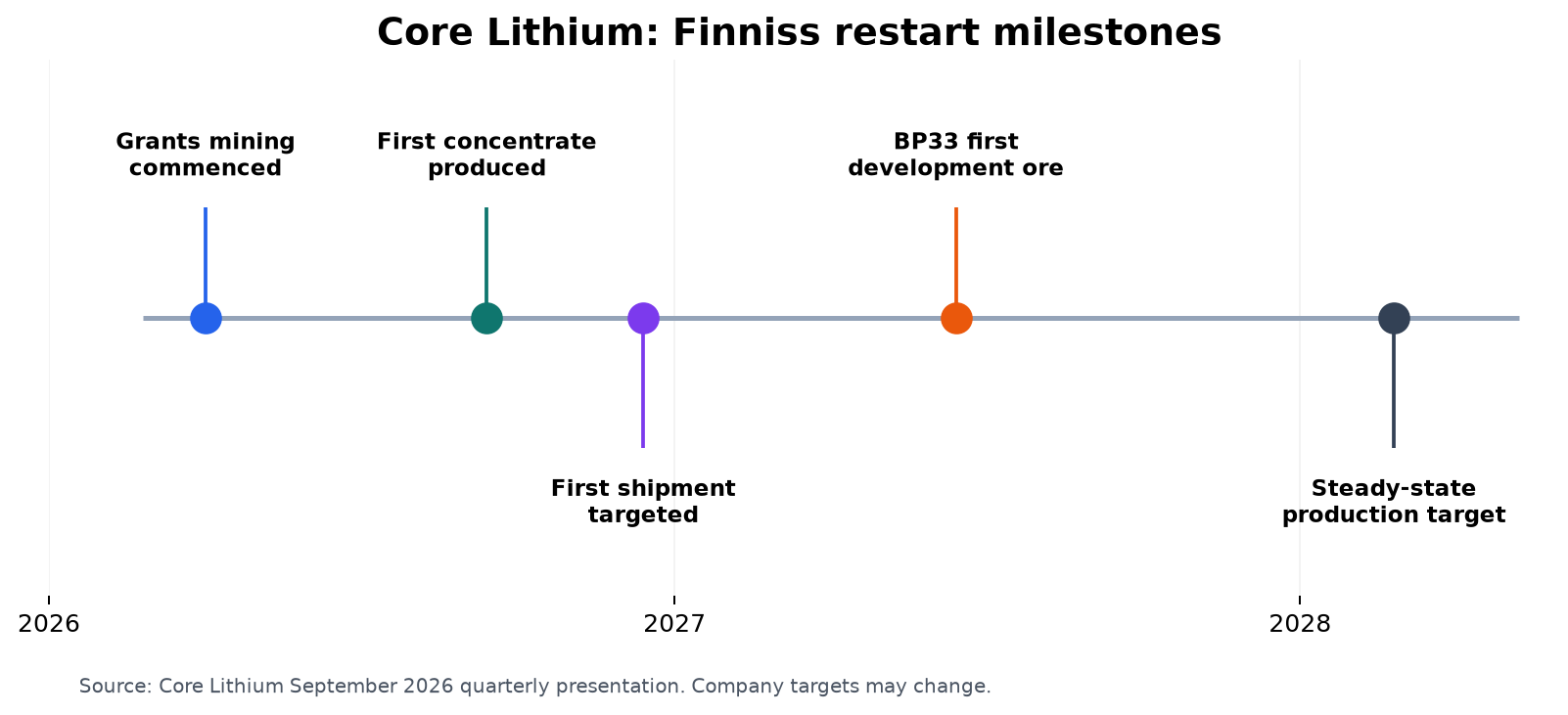
The company produced its first spodumene concentrate in September 2026 and is targeting its first shipment of newly produced product in the December quarter.
That makes CXO more than a lithium exploration story. It is now a restart-and-ramp-up investment case.
The opportunity is significant, but the risks remain high. Investors must still consider lithium prices, commissioning performance, funding, dilution, project delivery and the timing of BP33 underground production.
CXO Share Price and Analyst Expectations
Core Lithium’s investor page displayed a share price of approximately A$0.21 when accessed on 10 November 2026.
Third-party market pages show analyst expectations around A$0.30 on average, although estimates vary by provider and methodology.
An A$0.30 target would imply approximately 43% upside from A$0.21. That should not be treated as a forecast or guarantee. Small-cap lithium targets can change quickly when spodumene prices, funding assumptions or commissioning expectations move.
Why Core Lithium Is Back on Investors’ Watchlists
Finniss has restarted
Core’s board approved the Finniss restart in March 2026, alongside a funding package and an intended equity raise.
Mining at Grants commenced in May. The processing plant was then recommissioned, and first spodumene concentrate was produced within six months of the Final Investment Decision.
This is an important de-risking milestone, although production is still in commissioning and optimisation.
The project has existing infrastructure
Finniss is a brownfield operation with an existing processing plant and infrastructure. Core says the project is approximately 88 kilometres from Darwin Port, providing a relatively short route from mine to export facilities.
Existing infrastructure can reduce restart complexity and capital intensity compared with a completely new lithium development.
The mine plan is built around staged production
Grants is intended to provide near-term ore and cash flow while Core develops the larger BP33 underground operation.
Core is targeting steady-state production in mid-2028. The September 2026 presentation described a 1.2 million tonne per year throughput profile and nameplate production of approximately 257,000 tonnes per year of SC5 equivalent, or 214,000 tonnes per year of SC6 equivalent.
Source: Core Lithium September 2026 quarterly presentation. Company targets may change.
Core Lithium’s Latest Financial Position
Core reported approximately A$200 million of cash at 30 September 2026.
The company also reported about A$244 million of available funding, including cash, undrawn funding and receivables.
Restart capital remaining was reported at approximately A$157 million, including contingency.
This provides a meaningful liquidity cushion, but it does not eliminate financial risk. Core is still moving from development spending toward sustained operating cash flow.
Finniss Project Economics
Core’s March 2026 restart announcement cited a pre-tax NPV8 of A$1.1 billion, free cash flow generation of A$1.7 billion and unit operating costs of approximately US$762 per tonne on an SC6-equivalent basis.
Those figures were based on company assumptions, including a long-term spodumene concentrate price of US$1,500 per tonne. They are not realised results.
The September presentation used a steady-state SC5 cost figure of approximately A$635 per tonne, excluding royalties, and said the development remained funded through to steady-state production.
Investors should treat these estimates as project assumptions that need to be tested against actual recoveries, production volumes, prices and costs.
Finniss Ore Reserves and Growth Potential
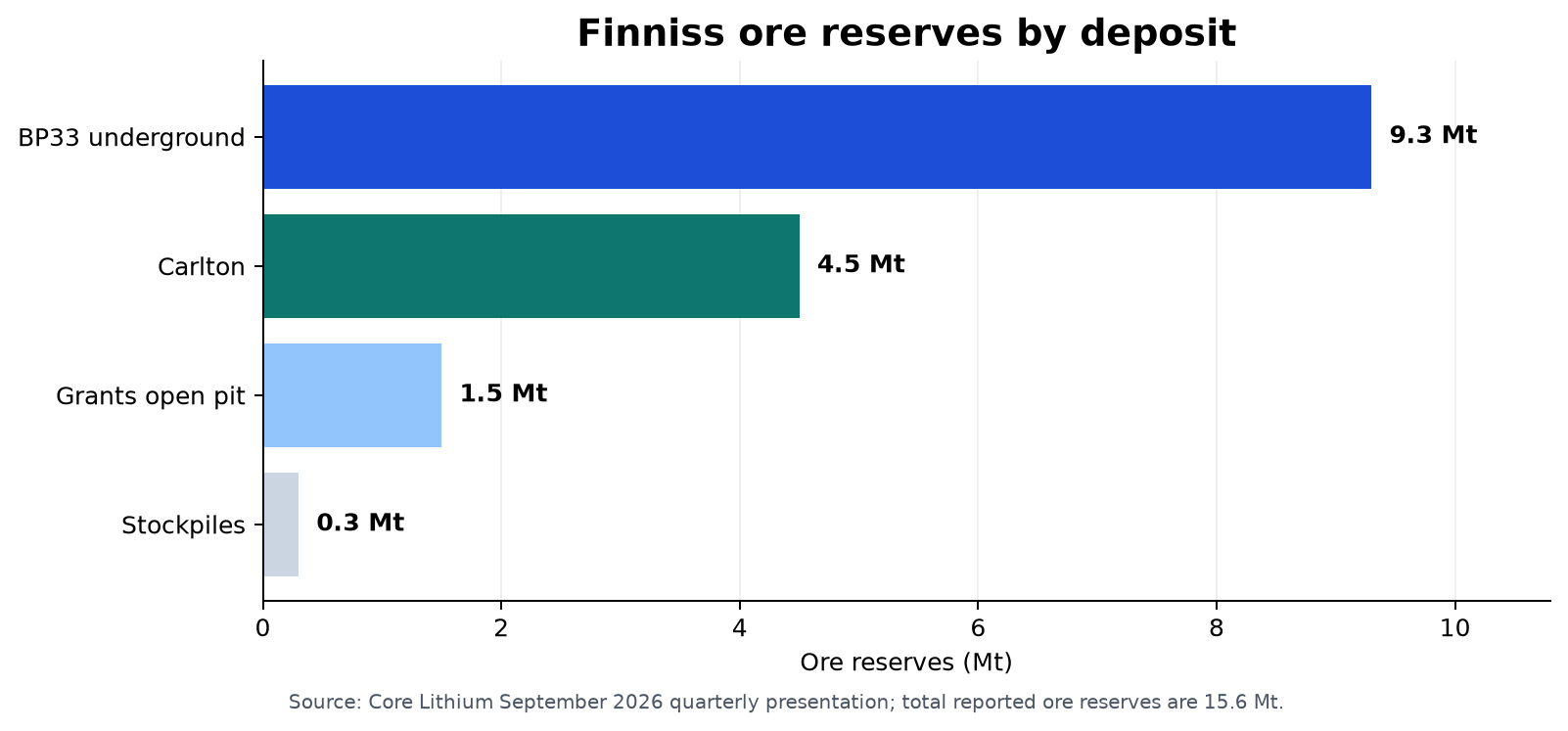
Core reported total Finniss ore reserves of approximately 15.6 million tonnes in the September 2026 presentation.
BP33 is the largest reserve component at about 9.3 million tonnes, followed by Carlton at 4.5 million tonnes and Grants at 1.5 million tonnes.
Source: Core Lithium September 2026 quarterly presentation. Reserve estimates are subject to the company’s stated assumptions and reporting qualifications.
BP33 is central to the long-term production plan. Core says first development ore is targeted for mid-2027, with steady-state production targeted for mid-2028.
The company is also drilling at BP33 and Blackbeard, creating potential exploration upside. Exploration upside should be treated as optionality, not as proven production.
Lithium Market Outlook for 2027
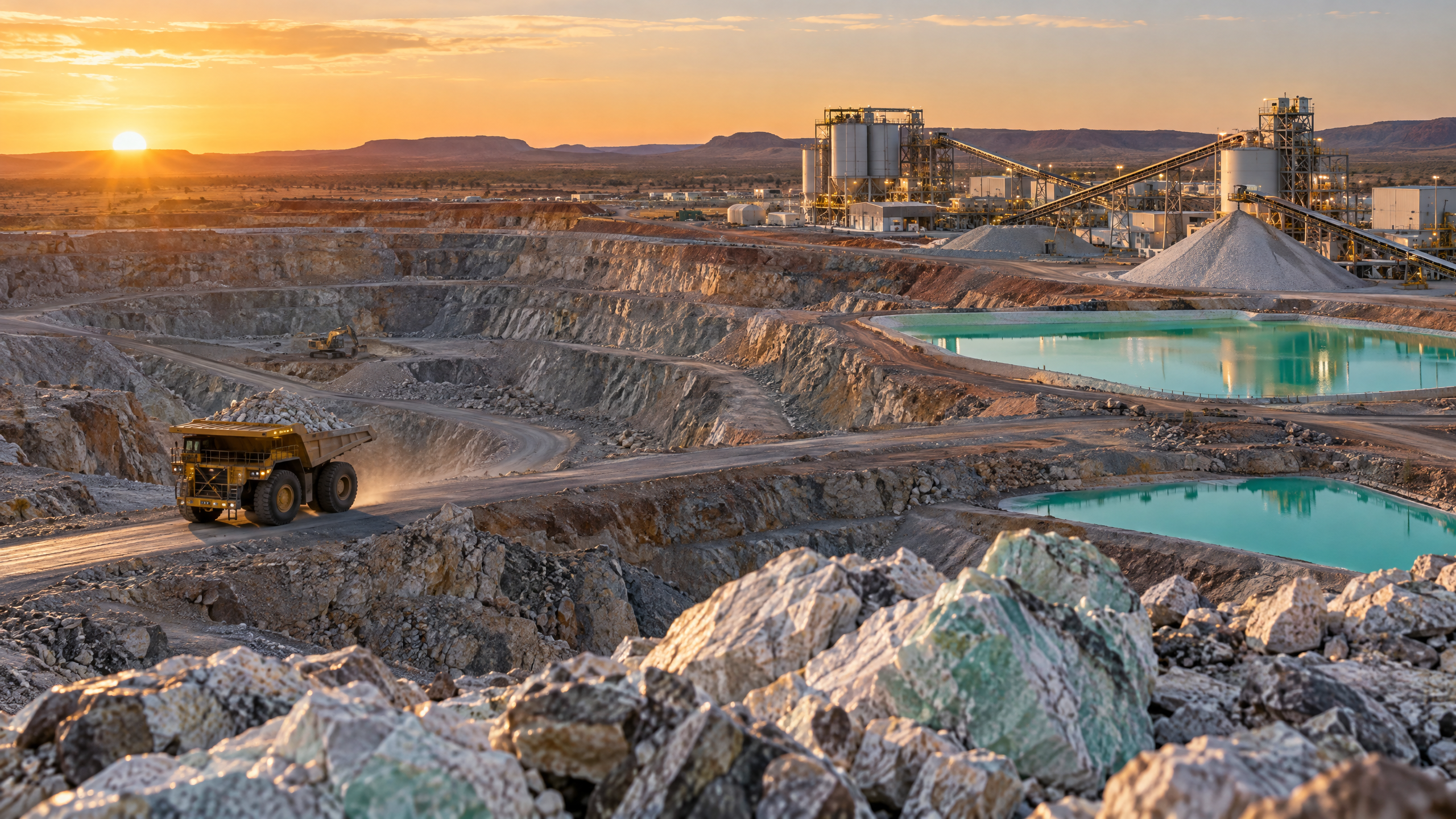
The long-term demand case for lithium remains strong. The International Energy Agency says lithium demand increased by around 25% per year on average over the previous two years, driven by batteries for electric vehicles and energy storage.
However, lithium remains a highly cyclical market. Oversupply, changing battery chemistries, slower EV growth and new production can pressure prices.
MarketIndex reported a wide range of 2027 spodumene assumptions from research houses, including approximately US$2,663 per tonne from Canaccord Genuity and a more cautious view from other analysts.
The message for CXO investors is straightforward: Core’s project economics are highly sensitive to the price received for spodumene concentrate.
Core Lithium Buy Case
1. The restart is becoming visible in operating data
First concentrate production is more meaningful than an exploration target or feasibility-study milestone. It shows that the processing plant has returned to operation, although the ramp-up is not complete.
2. Grants may provide early cash flow
Core expects approximately 134,000 tonnes of SC5 product from Grants in total, with the first shipment targeted for the December quarter of 2026.
Early shipments could provide cash flow while BP33 development continues.
3. Finniss has infrastructure and port access
The existing plant, permitted operation and proximity to Darwin Port may give Core a practical advantage over projects that still need major infrastructure.
4. BP33 provides the longer-term production engine
BP33 contains the largest part of the reported Finniss ore reserves and is central to the planned steady-state operation.
5. The balance sheet is stronger than during the earlier shutdown period
Cash and available funding have improved materially, giving Core more room to complete the restart.
Core Lithium Bear Case
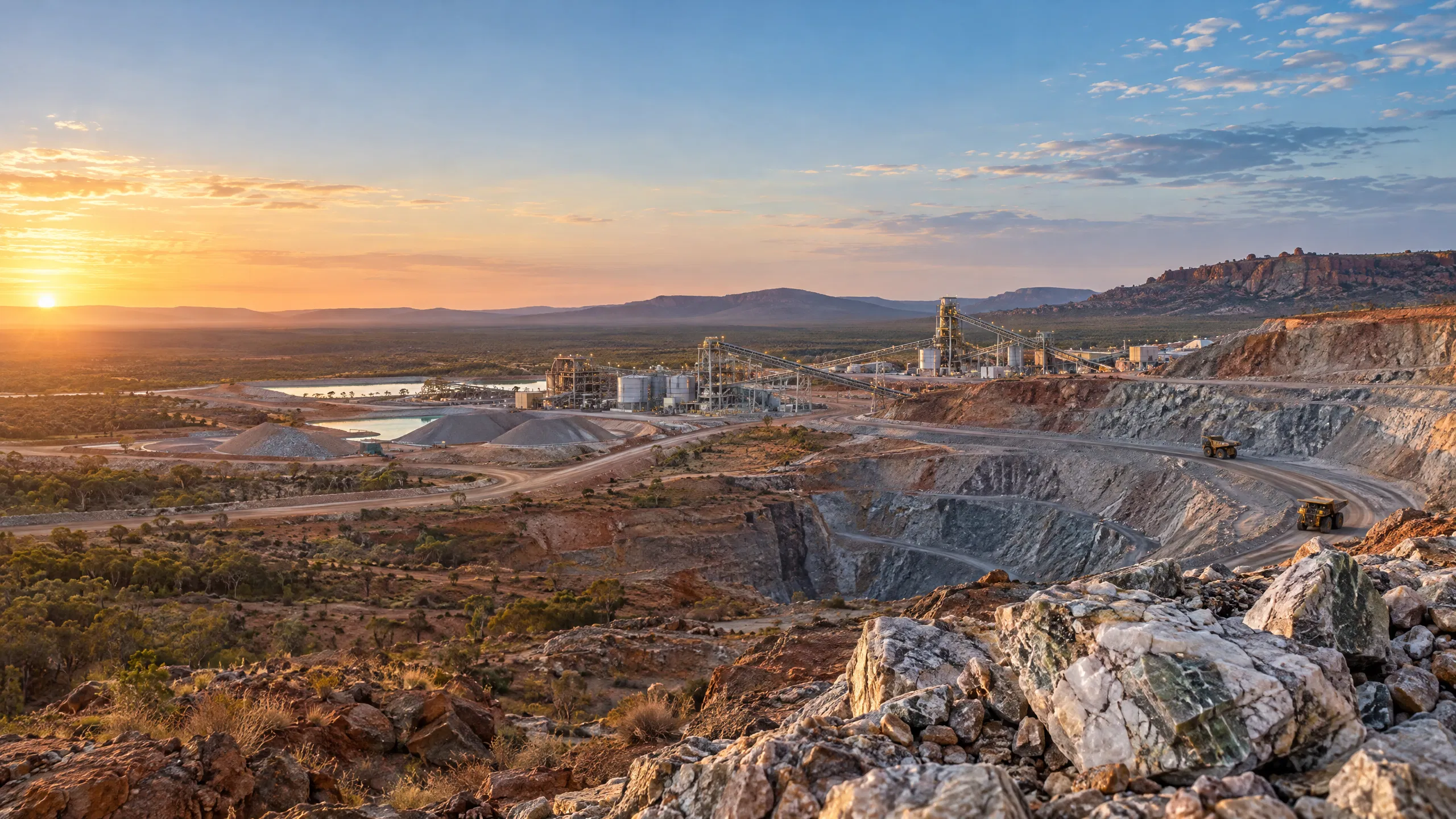
Lithium prices could fall again
Even a well-designed mine can struggle if spodumene prices fall below project assumptions. Lithium prices have historically experienced sharp booms and downturns.
Commissioning may take longer than expected
First concentrate does not equal stable commercial production. Core still needs to optimise throughput, recoveries, reliability and operating costs.
BP33 is a major execution test
The long-term production plan depends on underground development at BP33. Delays, cost increases or geological issues could reduce the value of the project.
Dilution remains a risk
Core’s restart funding included strategic funding and an intended A$120 million equity raise.
Equity funding supports the project but increases the number of shares investors must consider when assessing per-share value.
The company is not yet a mature cash-flow producer
Until shipments become regular and operating costs are demonstrated, CXO remains a higher-risk transition story rather than a stable mining income stock.
What to Watch in 2027
Investors should focus on a small number of operational indicators:
•First shipment timing and realised spodumene pricing
•Plant throughput, recoveries and commissioning progress
•Grants production and cash generation
•BP33 development progress and first development ore
•Cash burn, restart capital and funding drawdowns
•Offtake agreements and customer terms
•Lithium prices and supply-demand conditions
•Share count changes and potential dilution
Is ASX: CXO Worth Watching in 2027?
Core Lithium is worth watching if the investor is comfortable with small-cap mining risk and wants exposure to a potential Australian lithium restart.
The positive case is that Finniss reaches reliable production, Grants generates early cash, BP33 advances on schedule and lithium prices remain supportive.
The cautious case is that production ramps slowly, costs rise, lithium prices weaken or additional capital is required before the project reaches steady state.
Bottom line: CXO is a speculative lithium recovery and execution story. It may offer substantial upside if the Finniss restart performs as planned, but it should be analysed as a high-risk development-to-production transition—not as a proven, low-volatility producer.
Core Lithium Stock Analysis FAQs
What does Core Lithium do?
Core Lithium owns and operates the Finniss Lithium Operation in the Northern Territory. Finniss is a hard-rock lithium project producing spodumene concentrate.
Has Core Lithium restarted production?
Core produced its first spodumene concentrate in September 2026. The plant was still in commissioning and optimisation, with the first shipment of newly produced product targeted for the December quarter of 2026.
What is Core Lithium’s main project?
Finniss is Core Lithium’s main project. It includes the Grants open pit, BP33 underground development and Carlton, supported by existing processing and export infrastructure.
When could Core Lithium reach steady-state production?
Core is targeting steady-state production in mid-2028. BP33 first development ore is targeted for mid-2027.
Is Core Lithium profitable?
Core is transitioning back into production and should not be viewed as a mature, consistently profitable producer yet. Investors should monitor actual sales, costs, cash flow and commissioning performance.
What is the biggest risk for CXO shares?
The biggest risks are lithium-price volatility, production ramp-up problems, BP33 delays, cost inflation, funding needs and shareholder dilution.
What could drive the CXO share price higher in 2027?
Potential catalysts include successful first shipments, reliable production, strong spodumene prices, positive BP33 development updates, offtake agreements and evidence of improving cash flow.
Does CXO pay a dividend?
Core Lithium is a growth and development company. Investors should not buy CXO for dividend income. Cash is being directed toward restarting and developing Finniss.
Is CXO a buy in 2027?
That depends on the investor’s risk tolerance, valuation assumptions and view of the lithium market. CXO may suit a speculative portfolio position, but it is not a low-risk income investment.
This article was prepared using publicly available information accessed on 10 November 2026. Company targets, market prices, forecasts and project assumptions can change. This article is general information, not personal financial advice or a recommendation to buy, sell or hold CXO shares.