 info@stockbinge.com.au
 03 8609 4895

Blog Details
- Home
- Blog Details
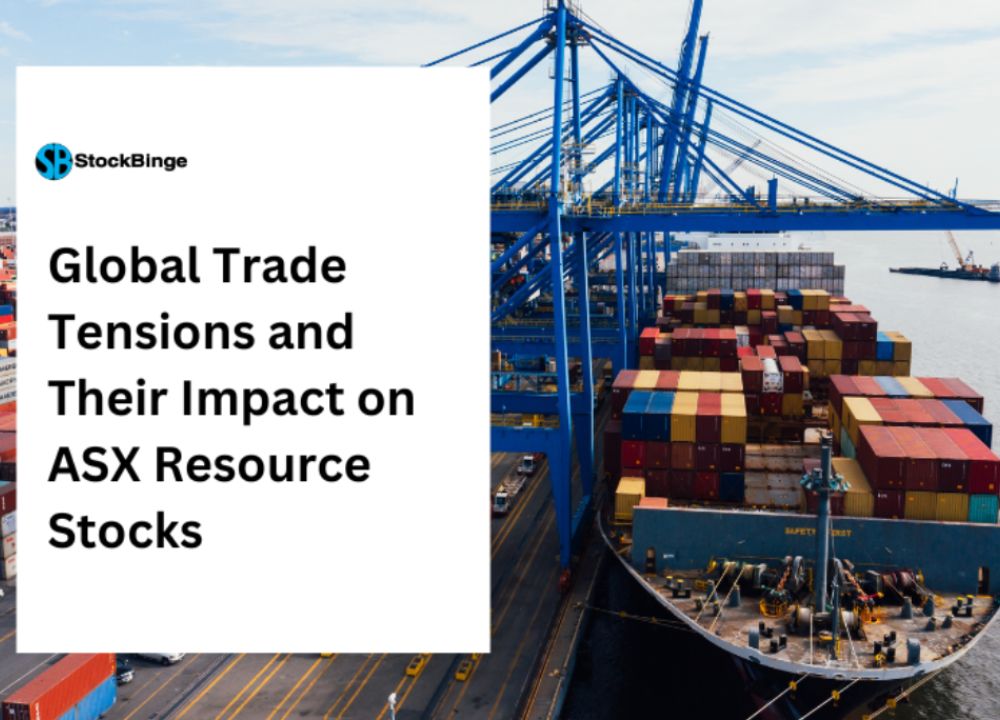
Global Trade Tensions and Their Impact on ASX Resource Stocks in 2026
Global trade tensions have become one of the most important forces shaping financial markets in 2026. For Australia, a nation whose economy depends heavily on resource exports — including iron ore, coal, copper, and agricultural products — trade disputes can have a direct impact on ASX-listed resource stocks.
Major mining companies such as BHP Group (ASX: BHP), Rio Tinto (ASX: RIO), and Fortescue Metals Group (ASX: FMG) are closely tied to global demand cycles, particularly in China, India, Japan, and Europe. Trade policies, tariffs, and supply chain restrictions can significantly influence their revenues, dividend payouts, and long-term growth strategies.
This article provides a comprehensive educational look at how trade tensions shape the performance of ASX resource stocks in 2026, the risks involved, and the strategies investors can consider when navigating this complex environment.
Why Trade Tensions Matter for ASX Resource Stocks
Australia’s Export-Driven Economy
-
Over 70% of Australia’s resource production is exported, making mining companies highly sensitive to global trade dynamics.
-
China remains the largest trading partner, especially for iron ore and lithium.
Investor Sensitivity
-
Trade headlines can trigger short-term volatility in ASX mining stocks.
-
Longer disputes affect earnings, project expansions, and dividend policies.
Historical Context
-
The US-China trade war (2018–2019) caused iron ore and copper price swings.
-
The China–Australia trade dispute (2020–2021) disrupted coal and wine exports, highlighting sector vulnerabilities.
Key Areas Where Trade Tensions Impact ASX Stocks
1. Iron Ore Exports and China Relations
Iron ore is Australia’s most valuable export, with BHP, Rio Tinto, and Fortescue dominating production.
-
China accounts for over 60% of demand, leaving Australian miners exposed to political disputes.
-
Tariff threats or alternative sourcing (from Brazil or Africa) can pressure ASX iron ore stocks.
-
In 2026, Chinese steel production remains strong, but government-led diversification poses risks.
Investor takeaway: Iron ore stocks remain highly profitable but are exposed to sudden trade shocks.
2. Lithium and the EV Supply Chain
Lithium has emerged as a strategic resource in the global electric vehicle (EV) boom.
-
Pilbara Minerals (ASX: PLS) and Allkem (ASX: AKE) are central to Australia’s lithium exports.
-
Trade disputes involving EV subsidies, US-China competition, or supply chain restrictions can impact demand.
-
Western economies are seeking to secure non-Chinese lithium sources, benefiting ASX-listed producers but also introducing geopolitical complexities.
Investor takeaway: Lithium stocks benefit from structural demand growth but face uncertainty from global industrial policies.
3. Copper, Nickel, and Energy Transition Metals
-
BHP and Rio Tinto are expanding in copper and nickel, essential for electrification.
-
Trade tensions between the US, EU, and China may lead to subsidy wars and protective tariffs on green technologies.
-
This creates volatility in commodity pricing and supply security.
Investor takeaway: These metals are critical for the energy transition but exposed to policy-driven demand shifts.
4. Coal and Energy Exports
-
Despite global decarbonisation, coal remains a major export to Asia.
-
Previous bans by China showed how quickly coal exporters can be affected by geopolitical shifts.
-
Energy security debates in 2026 keep coal demand strong in India and Southeast Asia, but political risks remain.
Investor takeaway: Coal producers generate high cash flows but carry significant trade and ESG risks.
5. Agriculture and Food Exports
Though mining dominates the ASX, agriculture also plays a role. Companies like GrainCorp (ASX: GNC) rely on global markets.
-
Tariffs or restrictions on wheat, beef, and wine exports can cause sharp earnings swings.
-
Climate events combined with trade disputes can amplify volatility.
Investor takeaway: Agricultural stocks provide diversification but remain sensitive to tariffs and global demand.
Case Studies: Trade Tensions and ASX Companies
Fortescue Metals (ASX: FMG)
-
Heavy reliance on Chinese steelmakers.
-
Mitigating risk by investing in green hydrogen and renewable energy exports.
BHP Group (ASX: BHP)
-
Diversified across iron ore, copper, and nickel.
-
Lower dependence on any single market, but trade shocks still impact commodity prices globally.
Pilbara Minerals (ASX: PLS)
-
Positioned at the heart of EV supply chains.
-
Benefiting from Western demand diversification but reliant on stable trade flows.
Rio Tinto (ASX: RIO)
-
Expanding copper projects in Mongolia and lithium in Argentina.
-
Geographic diversification helps, but commodity demand still tied to trade relations.
Risks for Investors in 2026
-
Commodity Price Volatility – Driven by tariffs, quotas, and policy uncertainty.
-
Supply Chain Disruptions – Shipping costs, port congestion, and geopolitical chokepoints.
-
Currency Fluctuations – AUD sensitivity to global trade headlines.
-
Regulatory Risks – ESG requirements, carbon tariffs, and compliance costs.
How Investors Can Approach Trade-Exposed Stocks
Diversify Exposure
-
Avoid over-concentration in iron ore.
-
Blend mining giants with healthcare, tech, and financials for balance.
Consider Geographic Diversification
-
Some ASX miners are expanding into South America, Canada, and Africa to reduce reliance on China.
Focus on Cost Leaders
-
Companies with low production costs (e.g., Fortescue in iron ore) are more resilient in downturns.
Monitor Policy Trends
-
Stay updated on China’s industrial policies, US trade agreements, and EU green subsidies.
-
Policy-driven demand shifts can move ASX resource stocks quickly.
Educational Takeaways
-
ASX resource stocks are deeply tied to global trade dynamics.
-
Iron ore, lithium, and copper remain central but vulnerable to policy shifts.
-
Trade disputes create both risks and opportunities for diversified investors.
-
Long-term success depends on balancing resource exposure with other ASX sectors.
Conclusion
Global trade tensions in 2026 continue to shape the outlook for ASX resource stocks. Companies like BHP, Rio Tinto, Fortescue, and Pilbara Minerals remain world leaders in mining, but their fortunes are linked to tariffs, supply chain security, and global industrial policy shifts.
For investors, the key lesson is that while resources will always be central to the Australian market, diversification and risk management are essential. By understanding the trade environment and monitoring geopolitical risks, investors can make better-informed decisions about their ASX portfolios.
References
-
Australian Bureau of Statistics – Export Data
-
DFAT – Australia’s Trade Statistics
Talk to Our Experts
ABN 54 672 177 347 | ACN 672 177 347
Copyright © 2026 StockBinge. All Right Reserved. Design by StockBinge.